
Over the last decade, marketing technology exploded. Thousands of platforms promise automation, personalization, optimization, and growth. As a result, small businesses did what seemed logical: they added marketing tools. Individually, each tool solves a problem. Collectively? They often create one.
While your team is busy logging in, exporting spreadsheets, and trying to connect the dots, opportunities slip through the cracks. Marketing tools without alignment don’t equal strategy.
Disconnected marketing tools don’t just create frustration. They create hidden costs.
The Real Cost of Disconnected Marketing Tools
1. Wasted Time (Your Most Expensive Resource)
Marketers spend hours:
- Manually pulling reports
- Reconciling conflicting data
- Copying content between platforms
- Rebuilding assets for each channel
- Switching between dashboards
Instead of focusing on strategy, creativity, and growth, your team becomes a data translator. Time spent managing tools is time not spent generating revenue or impact.
2. Fragmented Data = Poor Decisions
When systems don’t talk to each other:
- Website analytics don’t align with CRM insights
- Ad performance doesn’t connect to real revenue
- Email engagement doesn’t link to sales conversations
Enrollment or intake data sits isolated from campaign reporting
This leads to dangerous blind spots:
- You think a campaign is working when it isn’t.
- You kill initiatives that are actually driving conversions.
- Leadership loses trust in marketing data.
Disconnected data creates disconnected decisions.
3. Inconsistent Messaging
Without a central strategy engine:
- Social posts feel disconnected from email campaigns.
- Website messaging doesn’t match paid ads.
- Different departments speak in different voices.
- Teams chase trends instead of reinforcing positioning.
This inconsistency confuses your audience, and confused audiences don’t convert.
4. Compliance and Risk Exposure
Disconnected tools increase risk:
- Messaging isn’t reviewed consistently.
- Privacy standards aren’t centralized.
- Documentation becomes scattered.
Audit trails are incomplete.
When platforms aren’t aligned, oversight breaks down.
The Bigger Issue: Tools Don’t Create Strategy
Here’s the hard truth: Most businesses don’t have a tool problem; they have a strategy problem. Marketing tools execute tasks.
They do not:
- Align messaging to positioning
- Connect campaign objectives to business goals
- Identify gaps across channels
- Ensure consistent voice and brand clarity
- Synthesize data into actionable insights
Without a central intelligence layer, tools remain disconnected utilities. What businesses need is a strategic brain, and not just more software. What if:
- Every campaign reinforced your positioning?
- Every tool worked from the same strategic playbook?
- Every report told a consistent story?
- Every team member operated from clarity instead of confusion?
That’s not about adding another platform. It’s about adding intelligence.
Find Clarity with Katava+ AI
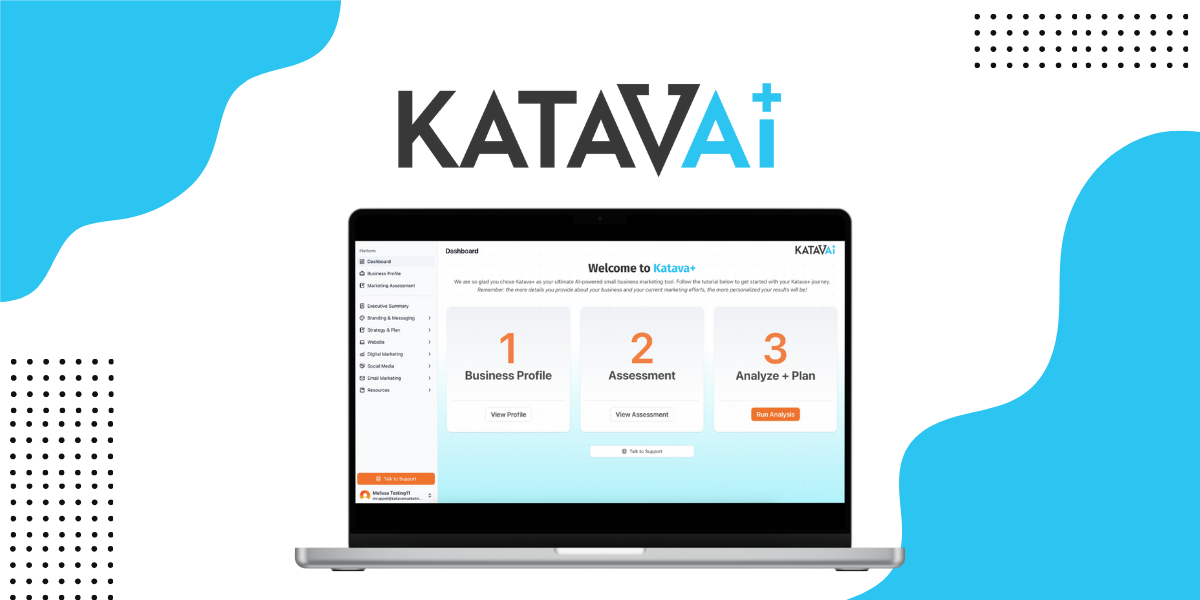
Katava+ AI was built specifically to solve this gap. Instead of replacing your tools, it connects strategy, messaging, and execution across them. It aligns your messaging, audience segments, and campaign objectives into one cohesive framework.
Katava+ AI acts as your strategic marketing command center. With Katava+, small businesses can:
- Turn business goals into clear, actionable marketing strategies
- Align messaging across channels automatically
- Identify what’s working (and what’s not) without digging through dashboards
- Make smarter decisions faster without a full internal marketing team
It’s not about doing more marketing.
It’s about doing the right marketing.
Ready to build a marketing plan that doesn’t fail?