
Small businesses don’t fail at marketing because they don’t care. They fail because their marketing plans are built on good intentions, not strategy. Most owners are juggling sales, operations, hiring, and customer service. For most small businesses, marketing becomes a patchwork of tools, tactics, and trends that feel productive but rarely deliver consistent results. If this sounds familiar, you’re not alone.
Let’s break down why most small business marketing plans fail, and what a smarter, strategy-first approach looks like.
1. They Confuse Activity With Strategy
Posting on social media. Running ads. Sending emails. Updating a website. These are marketing activities, not a marketing plan. Many small businesses jump straight into execution without answering the hard questions first:
- Who exactly are we trying to reach?
- What problem do we solve better than anyone else?
- What action do we want prospects to take?
Without clarity, marketing becomes noise. You may be busy, but you’re not building momentum.
Why it fails: Tactics without strategy lead to scattered messaging, wasted spend, and inconsistent results.
2. They Rely on Too Many Disconnected Tools
CRMs. Email platforms. Social schedulers. Ad managers. Analytics dashboards. Individually, these tools are powerful. Without a unifying strategy, they create chaos:
- Data lives in silos.
- Insights get lost.
- Teams make decisions based on guesses instead of performance.
Why it fails: Tools don’t create strategy. They only amplify whatever direction you’ve already set.
3. They Don’t Align Marketing With Business Goals
A marketing plan should support real business outcomes:
- Revenue growth
- Lead quality
- Customer retention
- Brand trust
Instead, many plans focus on surface-level metrics like impressions, clicks, or followers. These numbers may look good in reports, but don’t always move the business forward.
Why it fails: If marketing isn’t tied to outcomes leadership cares about, it’s the first thing to get cut or ignored.
4. They Lack Consistency Over Time
Small businesses often start strong:
- A new website launch
- A burst of social content
- A short ad campaign
Then life happens. Without a clear roadmap and prioritization, marketing becomes reactive. Efforts stall. Momentum disappears.
Why it fails: Growth requires sustained, focused execution (not sporadic bursts of effort).
5. They Don’t Measure What Actually Matters
Many businesses collect data, but don’t know how to interpret it.
They ask:
- “Did this post do well?”
- “Are ads expensive right now?”
Instead of:
- “Which channels are driving qualified leads?”
- “What messaging converts best for our audience?”
Why it fails: Data without insight leads to repeated mistakes instead of smarter decisions.
What a Successful Small Business Marketing Plan Actually Needs
A plan that works doesn’t start with digital marketing tools or tactics. It starts with strategy.
That means:
- Clear positioning and audience definition
- Prioritized channels based on impact, not trends
- Messaging aligned across every touchpoint
- Measurable goals tied to business outcomes
- A system for learning and optimizing over time
This is exactly where most small businesses struggle, and where Katava+ AI comes in.
How Katava+ AI Helps Small Businesses Succeed
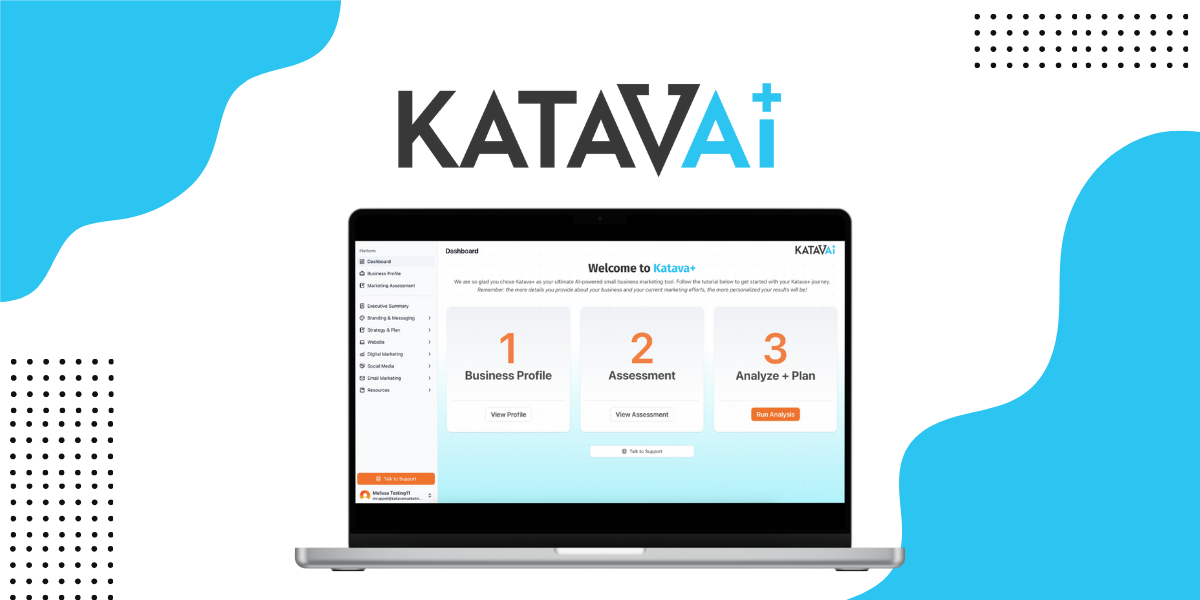
Katava+ AI is built to solve the real reason marketing plans fail: lack of strategic alignment.
Katava+ acts as your strategic marketing command center. With Katava+, small businesses can:
- Turn business goals into clear, actionable marketing strategies
- Align messaging across channels automatically
- Identify what’s working (and what’s not) without digging through dashboards
- Make smarter decisions faster without a full internal marketing team
It’s not about doing more marketing.
It’s about doing the right marketing.
Ready to build a marketing plan that doesn’t fail?